
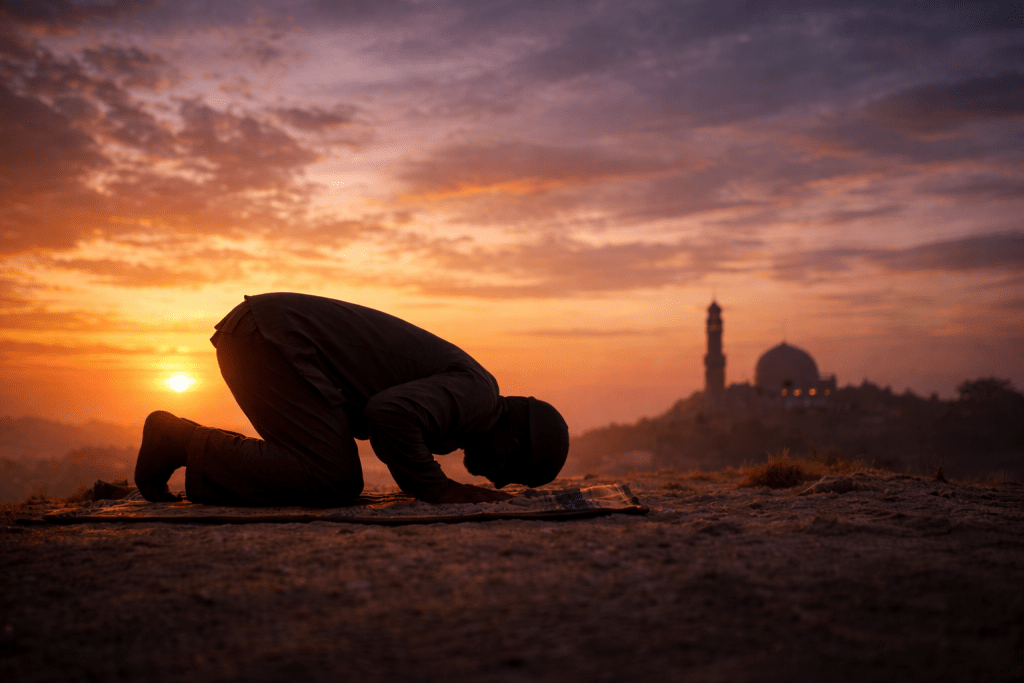
There are seasons when prayer feels intimate, steady, and alive—and other seasons when it feels heavy, distracted, or strangely distant. You still stand. You still bow. You still complete your salah. But the warmth feels muted. If you are losing motivation to pray, you are not alone, and you are not a hypocrite.
Many sincere Muslims experience periods of spiritual dryness in Islam. This does not automatically mean your faith is collapsing. It often means your heart is moving through a natural cycle of high and low iman. Before labeling yourself with guilt or fear, it is important to understand what this phase truly represents and what it does not.

Losing motivation to pray
What Does It Mean to Lose Motivation to Pray?
Losing motivation to pray does not necessarily mean abandoning prayer altogether. There is a crucial distinction between:
- Losing enthusiasm (feeling disconnected or lacking khushu).
- Completely leaving salah (abandoning the obligation entirely).
The first is a natural fluctuation. The second is a deliberate decision.
You may still pray consistently while feeling internally tired. The sweetness feels absent. Focus feels scattered. The desire feels weaker. Yet, you still show up. That matters deeply.
The heart is not a machine designed for constant emotional intensity. It expands and contracts. It feels spiritually strong at times and spiritually fatigued at others. Expecting permanent emotional elevation in worship is unrealistic and can even create more pressure.
Sometimes, when prayer feels heavy, it is not a sign that your faith is gone. It is a sign that your heart needs care rather than condemnation.
Allah reminds us:
“Indeed, in the remembrance of Allah do hearts find rest.”
(13:28, Qur’an)
If rest comes from remembrance, then heaviness may signal that remembrance has become rushed, distracted, or disconnected from meaning—not that it has disappeared.
Is Losing Motivation a Sign of Weak Faith?
In Islamic spirituality, faith (iman) naturally increases and decreases. This fluctuation is not a modern psychological idea—it is deeply rooted in the tradition itself.
The Prophet Muhammad ﷺ said:
“For every deed there is enthusiasm, and for every enthusiasm there is a period of decline. Whoever’s decline remains within the Sunnah has succeeded.”
(Reported by Ahmad)
This hadith is powerful. It tells us that experiencing signs of weak faith or a decline in energy is expected. The danger is not fluctuation—the danger is abandoning guidance during that fluctuation.
The Prophet ﷺ also taught:
“Faith wears out in the heart just as clothes wear out, so ask Allah to renew faith in your hearts.”
(Reported by Al-Hakim)
Renewal implies fading. If faith never weakened, renewal would not be necessary.
So, if you feel lazy to pray sometimes but still feel concerned about it, that concern itself is a sign of iman. A completely detached heart does not worry.
Temporary Laziness vs. Intentional Neglect
This distinction protects the heart from both despair and denial.
Signs of Temporary Spiritual Laziness
- You still pray, even if without strong emotion.
- You feel uneasy about the lack of motivation.
- You want to improve and learn how to focus in salah again.
- The heaviness comes in waves.
This type of state often connects to physical exhaustion, emotional overload, or life stress.
Signs of Intentional Neglect
- Repeatedly delaying prayer without concern.
- Feeling indifferent rather than troubled.
- Making no effort to return.
- Justifying avoidance long-term.
Allah warns:
“So woe to those who pray, but are heedless of their prayer.”
(107:4–5, Qur’an)
This verse addresses persistent heedlessness—not human struggle. There is a vast difference between temporary weakness and outright indifference.
If you are struggling but still care, you are not heedless. You are human.
Common Reasons Prayer Starts to Feel Heavy
When losing motivation to pray becomes noticeable, it usually traces back to a few core patterns.
1. Prayer Becomes a Task Instead of a Meeting
When salah slowly turns into a checklist item rather than an encounter with Allah, motivation naturally decreases. Movement without meaning feels mechanical.
Allah describes successful believers as:
“Those who are humble in their prayer.”
(23:2, Qur’an)
Khushu in prayer (humble focus) is cultivated; it is not automatic. When it weakens, it signals the need for renewal—not self-attack.
2. Psychological and Emotional Exhaustion
Modern life drains attention constantly. Work pressure. Family demands. Endless notifications. When your mind is overloaded, stillness becomes difficult.
Sometimes, why prayer feels heavy has less to do with belief and more to do with burnout.
3. Constant Mental Distraction
Living in a state of continuous scrolling and multitasking trains the brain for fragmentation. Then, when you stand to pray, your mind continues racing.
This is not always a spiritual defect. It may simply be a habit of attention that needs retraining.
How to Restore Motivation Without Forcing Yourself
Force often backfires spiritually. Gentle consistency works better than dramatic reform.
1. A Micro-Reset Before Prayer
- Pause for thirty seconds before beginning salah.
- Put your phone away.
- Take one slow breath.
Say quietly: “I am about to stand before Allah.”
Preparation creates presence. Motivation often grows from intentional transition.
2. Slow One Element Down
Instead of trying to transform the entire prayer, slow just one part. One sujood. One recitation. One moment of silence.
Depth in a single element can soften heaviness more effectively than rushing through many.
3. Lower Emotional Expectations, Not Standards
Not every prayer will feel profound. Just as not every conversation with someone you love is emotionally intense, yet you still show up.
Keep the standard of consistency. Release the expectation of constant spiritual intensity.
4. Make an Honest Dua About Motivation
The Prophet ﷺ frequently sought refuge, saying:
“O Allah, I seek refuge in You from anxiety, sorrow, weakness, and laziness.”
(Reported by Bukhari)
Notice that laziness is mentioned explicitly. Seeking protection from it is part of prophetic guidance.
You can also speak plainly:
“O Allah, I feel a lack of motivation to pray. Help me want to stand before You.”
Even asking for motivation is an act of turning back to Allah.

Losing motivation to pray
A Realistic Example
Consider someone who has prayed consistently for years. Then life becomes overwhelming: deadlines, financial pressure, family responsibilities. Gradually, prayer feels rushed. The energy fades. Motivation decreases.
Instead of quitting or drowning in guilt, he makes small adjustments. He turns off his phone five minutes before prayer. He reads the meaning of one short surah weekly. He stops expecting emotional fireworks and focuses on consistency.
Some days still feel heavy. But he keeps showing up.
After weeks, something shifts—not dramatically, but gently. Presence increases. The heaviness softens. Motivation returns gradually.
What changed?
- Not his faith overnight.
- Not his personality.
- His approach.
He treated spiritual fatigue as a signal, not a verdict.
Conclusion
Losing motivation to pray does not erase your faith. It does not cancel your sincerity. It reflects the natural fluctuation of the human heart.
The Prophet ﷺ would often say:
“O Turner of the hearts, keep my heart firm upon Your religion.”
(Reported by Tirmidhi)
If the best of creation asked for stability, then asking for renewed motivation is not weakness—it is wisdom.
Faith is not measured by constant emotional intensity. It is measured by returning again and again.
- Even quiet prayer counts.
- Even small effort matters.
- Even showing up while tired is an act of sincerity.
And with patience, honesty, and gentle consistency, motivation can return—not by force, but by care.