

Understanding Spiritual Burnout in Islam and Why Prayer Sometimes Feels Heavy.
You stand for prayer and everything looks normal from the outside, But inside, something feels different, Your body is present, Your lips move and Your actions are correct.
But your heart feels far away like it is watching from a distance rather than participating.
Instead of peace, you feel pressure.
Instead of calm, you feel weight.
Instead of connection, you feel emotional distance, And quietly, without telling anyone, you ask yourself:
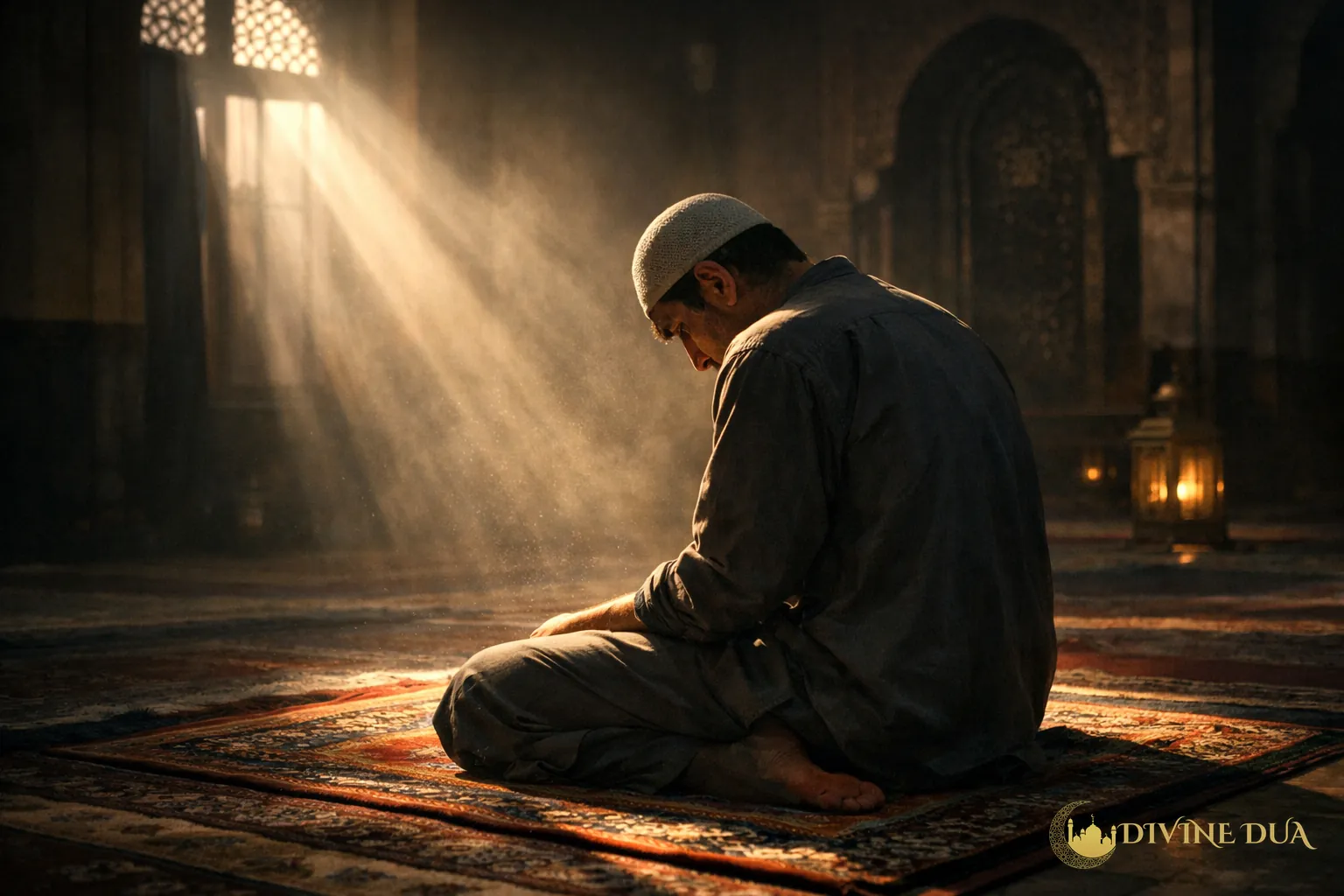
When worship feels like a burden
When worship feels like a burden instead of peace what is really happening to me?
This is one of the most silent struggles among believers.
Not because it is rare but because people rarely talk about it honestly.
You are struggling because you care deeply but you are tired.
The Hidden Gap Between Worship and Emotional State
One of the most important spiritual misunderstandings is assuming that your emotional state reflects your faith.
But in reality:
- Faith is stable in its essence.
Emotions are not. - You are not meant to feel the same level of connection every single day.
- Some days your heart is open and soft.
Other days it feels tight, distracted, or even numb. - This does not mean your worship has lost value.
﴿وَإِنَّهَا لَكَبِيرَةٌ إِلَّا عَلَى الْخَاشِعِينَ﴾
“And indeed, it is difficult except for the humble.” (2:45)
Even the Qur’an acknowledges that worship can feel heavy at times especially when the heart is not in a state of calm presence.
Why Does Prayer Feel Heavy Sometimes?
If you are searching for why does prayer feel heavy sometimes, the answer is often layered not simple.
It is rarely one cause. It is usually a combination of emotional, psychological, and spiritual factors interacting together.
1. Emotional Fatigue
Life accumulates silently. Stress, worries, and emotional strain do not disappear when prayer begins. They follow you into stillness.
2. Mental Overload
A busy mind struggles to slow down. When thoughts are racing, presence becomes difficult.
3. Anxiety and Inner Noise
Instead of silence, there is internal dialogue—judgment, worry, distraction.
4. Spiritual Burnout in Islam
A real state where worship feels repetitive, emotionally empty, or heavy due to prolonged internal exhaustion.
5. Routine Without Meaning
When actions become automatic, the heart disconnects slowly without noticing.
Spiritual Burnout in Islam: A Quiet Internal Exhaustion
Spiritual burnout does not look dramatic.
It does not mean abandoning worship.
It often looks like continuing while feeling empty inside.
You still pray.
You still try.
But something feels missing.
The Prophet ﷺ said:
“Indeed, this religion is ease…” (Bukhari)
Ease here is not just permission it is structure.
Islam does not expect constant emotional intensity. It expects consistency with gentleness.
Sometimes it is a sign of carrying too much without rest.
When Worship Becomes Pressure Instead of Peace
A subtle shift can happen over time.
Worship stops feeling like connection and starts feeling like expectation.
You begin to feel internal pressure:
- Pressure to feel something you don’t feel
- Pressure to perform perfectly
- Pressure to never struggle
But worship was never meant to be a performance.
It was meant to be a relationship.
The Human Reality of Faith: Even the Companions Felt It
One of the companions, Hanzalah, once said:
“حنظلة نافق”
He thought his emotional change meant hypocrisy.
But the Prophet ﷺ explained something deeply important:
Iman rises and falls.
This means even the most righteous people experienced emotional fluctuation in their spiritual state.
So what you feel is not new. It is part of being human.
Signs of Feeling Tired of Worship in Islam
This is not a diagnosis. It is recognition.
- Prayer feels rushed or mechanical
- Guilt replaces peace
- Emotional numbness during worship
- Feeling like worship is “just something to finish”
- Desire to reduce acts due to exhaustion
These signs do not mean failure.
They mean fatigue.
How to Reconnect with Worship Without Pressure
Healing spiritual fatigue does not require intensity.
It requires softness and consistency.
1. Slow Down One Prayer
Choose one prayer daily and intentionally slow it down. Focus on presence rather than speed.
2. Reduce Voluntary Acts Temporarily
Not abandonment—adjustment. Give your heart space to breathe.
3. One Honest Dua Before Prayer
“Ya Allah, help me be present with You.”
4. Change Your Environment
A small physical change can refresh mental state and attention.
5. Reflect on One Single Ayah
Instead of many verses, choose one and sit with it.
“The most beloved deeds to Allah are those done consistently, even if small.” (Muslim)
﴿لَا يُكَلِّفُ اللَّهُ نَفْسًا إِلَّا وُسْعَهَا﴾
Reframing Worship: From Obligation to Return
What if prayer was not something you perform
But somewhere you return to?
﴿أَلَا بِذِكْرِ اللَّهِ تَطْمَئِنُّ الْقُلُوبُ﴾
“In the remembrance of Allah do hearts find rest.” (13:28)
Rest is not always immediate.
Sometimes it is gradual—like emotional recovery.
Why Struggling in Worship Does Not Mean Distance from Allah
One of the most harmful internal assumptions is:
“If I struggle, I must be far from Allah.”
But struggle can also mean the opposite:
You are still trying to return, even when it feels difficult.
Distance is not always absence. Sometimes it is fatigue.
The Quiet Internal Dialogue No One Talks About
One of the deepest reasons worship feels heavy is not what happens during prayer itself—but what happens before you even stand for it.
There is often a silent internal dialogue that no one sees.
You might find yourself thinking:
- “I should feel more than this.”
- “Why am I not as focused as others?”
- “Something is wrong with me spiritually.”
And slowly, without realizing it, worship becomes emotionally charged—not because of the act itself, but because of the expectations you carry into it.
This internal pressure creates a cycle:
You feel disconnected → you blame yourself → you feel more pressure → you feel even more disconnected.
And this is where spiritual burnout in Islam quietly deepens—not through lack of worship, but through emotional overload attached to worship.
Why Overthinking Destroys Presence in Worship
A major hidden factor behind why salah feels like a chore is overthinking.
Instead of being present in the moment, the mind shifts into evaluation mode:
- “Am I doing this right?”
- “Did I lose focus?”
- “Should I restart my concentration?”
This creates a paradox: the more you try to force perfect focus, the more distant you feel.
Because presence is not achieved through pressure it is achieved through calm acceptance.
Even in psychology, forced attention creates cognitive resistance. The mind naturally rebels when it feels controlled.
That is why gentle worship often feels deeper than forced intensity.
The Role of Emotional Seasons in Faith
Faith is not static. It moves in seasons just like the human heart.
There are seasons where worship feels light, natural, and deeply fulfilling.
And there are seasons where even the simplest acts feel heavy.
This does not indicate spiritual failure. It indicates emotional variation.
Just as the body needs rest after physical effort, the heart also goes through cycles of expansion and contraction.
Imam Ibn al-Qayyim spoke about how the heart experiences moments of openness and moments of constriction. This is part of its nature.
So when you feel low spiritually, it is not necessarily a “problem to fix immediately”—it may be a phase to move through with patience.
When You Mistake Fatigue for Distance from Allah
One of the most painful misunderstandings in worship is assuming:
“If I feel distant, Allah is distant from me.”
But in reality, emotional distance is not equal to spiritual abandonment.
Sometimes you are not far from Allah—you are simply tired in your approach toward Him.
The connection is still there, but your ability to feel it is temporarily weakened by emotional exhaustion.
This is similar to being physically tired: your strength is not gone, it is just unavailable at the moment.
And this is where mercy becomes central.
Allah does not measure you by your emotional peaks. He knows your consistency, your intention, and your struggle.
﴿وَنَحْنُ أَقْرَبُ إِلَيْهِ مِنْ حَبْلِ الْوَرِيدِ﴾
“And We are closer to him than his jugular vein.” (50:16)
Closeness is not something you always feel—but it is something that remains constant.
The Danger of Comparing Your Worship to Others
Another silent cause of heaviness is comparison.
In moments of weakness, you may look at others and assume they are more consistent, more focused, or more spiritually “complete.”
But comparison creates distortion.
You are seeing someone else’s outward moment not their internal struggle.
Even the most consistent worshippers experience days of distraction and emotional fatigue.
But comparison makes your own struggle feel personal, when in reality it is universal.
This leads to unnecessary guilt, which increases emotional weight in worship.
And the heavier worship feels emotionally, the harder it becomes to reconnect with it.
How Mercy Changes the Entire Experience of Worship
One of the most transformative shifts in spirituality is moving from self-criticism to self-understanding.
When you approach worship with harsh internal judgment, you carry emotional tension into it.
But when you approach it with mercy, something softens internally.
You are no longer entering prayer as someone “trying to fix themselves.”
You are entering as someone returning to peace.
And this subtle shift changes everything.
Because worship is not only about what you do it is also about the emotional space you bring into it.
Mercy creates openness. Pressure creates resistance.
And often, the barrier between you and peace is not lack of effort but excess pressure.

When worship feels like a burden
A Gentle Truth to Remember
You only have to return.
This is the quiet foundation of spiritual resilience.
Not intensity. Not perfection. Not emotional highs, But return
Again and again.
- Even when it feels heavy.
- Even when it feels distant.
- Even when it feels like nothing is changing.
Because slowly, something always does.
FAQ
Is it sinful to feel disconnected in prayer?
No. Feelings are not sins, but they are indicators.
Why does salah feel like a chore?
Because of emotional exhaustion, stress, or routine without presence.
How do I reconnect spiritually?
By slowing down, reducing pressure, and returning gently.
Is spiritual burnout real in Islam?
Yes, it is a human experience of emotional exhaustion in worship.
Conclusion
Worship was never meant to crush you.
It was meant to carry you.
If it feels heavy right now, it does not mean you are far.
It means you are human.
And being human is exactly why mercy exists.
So return not with pressure but with gentleness.