
After months of anticipation and making dua for safe pregnancy and delivery, there is no feeling in the world quite like holding your newborn for the first time. That moment of overwhelming joy and gratitude naturally leads a Muslim parent to ask: “How can I thank Allah for this immense blessing?” In Islam, this expression of gratitude is known as Aqiqah (عقيقة).
In Islam, this expression of gratitude is known as Aqiqah (also commonly spelled as Aqeeqa or Akika).
While the concept sounds simple—a sacrifice performed for a newborn—many new parents find themselves overwhelmed with questions. What is Aqiqah exactly? Is it mandatory or just a recommended Sunnah? How should the meat be distributed, and what are the specific rules for a baby boy versus a baby girl?
You are not alone in these questions. Whether you are planning to perform the sacrifice yourself, ordering it online, or simply want to understand the Aqiqah meaning and spiritual benefits, this guide is written for you. We have compiled everything you need to know in one place—authentic rulings (Fiqh), step-by-step instructions, cost breakdowns, and common mistakes to avoid.
Let’s begin this blessed journey of welcoming your child into the Ummah.
What Is Aqiqah in Islam? (Meaning & Origin)
To truly appreciate this ritual, it is essential to first understand the meaning of Aqiqah (عقيقة) in both language and Islamic tradition.
Linguistically, the Arabic word “Aqiqah” comes from the root Al-Aqq, which means “to cut” or “to split.” Originally, this term referred to the hair on the newborn’s head because it is cut or shaved. Later, the term was adopted for the animal that is sacrificed on behalf of the newborn.
In the definition of Aqeeqah according to Sharia (Islamic Law), it is the act of slaughtering a sacrificial animal (sheep or goat) for a newborn child on the seventh day after birth. This act, which follows the beautiful journey of dua for safe pregnancy and delivery, serves as a ransom for the child and an expression of profound gratitude to Allah.
Historically, the Arabs performed a similar ritual before Islam, but they would smear the baby’s head with the animal’s blood. The Prophet Muhammad (Peace Be Upon Him) reformed this practice, instructing Muslims to shave the hair and apply fragrance (saffron) instead, turning it into an act of purity rather than a pagan ritual.
The Aqeeqah meaning in Islam is deeply rooted in the authentic Hadith narrated by Salman bin ‘Amir Ad-Dabbi, who said:
“مَعَ الْغُلاَمِ عَقِيقَةٌ فَأَهْرِيقُوا عَنْهُ دَمًا وَأَمِيطُوا عَنْهُ الأَذَى”
“I heard Allah’s Messenger (ﷺ) saying, ‘With the boy there is an ‘Aqiqah, so spill blood for him and remove the harm from him.'”
Source: Sahih al-Bukhari 5472
Ruling of Aqiqah (Sunnah Mu’akkadah)
One of the most frequently asked questions by new parents is: is Aqeeqah Sunnah or Wajib (mandatory)?
The majority of Islamic scholars—including the Shafi’i, Maliki, and Hanbali schools of thought—agree that the general ruling of Aqeeqah is Sunnah Mu’akkadah (a confirmed Sunnah). This means it was a practice consistently performed by the Prophet Muhammad (ﷺ) and is strongly encouraged, yet it is not obligatory like the five daily prayers.
This understanding of the Fiqh of Aqeeqah is derived primarily from the famous Hadith narrated by Samurah bin Jundub:
“كُلُّ غُلاَمٍ رَهِينَةٌ بِعَقِيقَتِهِ تُذْبَحُ عَنْهُ يَوْمَ السَّابِعِ وَيُسَمَّى وَيُحْلَقُ رَأْسُهُ”
“Every boy is held in pledge for his ‘Aqiqah which is slaughtered on his behalf on the seventh day, and he is named and has his head shaved.”
Source: Sunan Ibn Majah 3165
What does “held in pledge” mean?
Great scholars like Ibn al-Qayyim explained that this may mean the child’s ability to intercede for their parents on the Day of Judgment is suspended or dependent on the Aqiqah. This interpretation highlights the immense spiritual weight of this act.
However, Islam is a religion of ease. Contemporary scholars such as Sheikh Ibn Baz and Sheikh Al-Uthaymeen have clarified that the Sunnah applies to those who are capable. If a parent is financially unable to afford the sacrifice, there is no sin upon them, and they are not required to take out loans to perform it.
The Spiritual Significance of Aqiqah in Islam
While understanding the rules is necessary, grasping the true importance of Aqeeqah transforms it from a mere ritual into a heartfelt act of worship. At its core, Aqiqah is the ultimate expression of gratitude to Al-Wahhab (The Bestower).
The Aqeeqah significance lies in the concept of redemption and protection. Just as Prophet Ibrahim (AS) was commanded to sacrifice his son Ismail, and Allah ransomed him with a ram, the Aqiqah serves as a symbolic ransom for the newborn. It is an act that seeks Allah’s protection for the child from Shaytan and unseen harm, acting as a spiritual shield as they begin their life.
Beyond the individual, the social benefits of Aqeeqah are profound. It is one of the first opportunities to bring the community together, strengthening family bonds and spreading joy by sharing the meat with neighbors and the poor. It teaches us that our blessings are meant to be shared, not hoarded.
How to Perform Aqiqah in Islam (Step-by-Step)
Performing this Sunnah correctly involves a sequence of blessed acts. Below is a complete aqeeqah guide to help you navigate the process smoothly and according to the prophetic tradition.
The Best Time for Aqiqah
According to the Sunnah, the preferred aqeeqah timing is on the seventh day after birth. Scholars explain the calculation method simply:
Example: If the baby is born on a Monday, the 7th day is the following Sunday. (Note: You do not count the day of birth if the baby is born after Maghrib/Sunset).
If you miss the 7th day, you may perform it on the 14th or the 21st day. If those are also missed, most scholars agree it can be done at any time before the child reaches puberty.
The Process: Aqeeqah Step by Step
If you are wondering how to perform aqeeqah properly, follow these essential steps:
- Make the Intention (Niyyah): The father or guardian must intend in his heart that this sacrifice is specifically for the Aqiqah of his child.
- Choose the Animal: Select a healthy sheep or goat. The animal must be free from defects (like blindness or sickness) and meet the proper age requirements (6 months+ for sheep, 1 year+ for goats).
- Sharia-Compliant Slaughter: At the moment of slaughter, the person must say:
“بِسْمِ اللهِ وَاللهُ أَكْبَرُ، اللهم لك وإليك، هذه عقيقة [اسم المولود]”
“Bismillahi wa Allahu Akbar. O Allah, this is for You and from You, this is the Aqiqah for [Child’s Name].” - Shaving the Hair: On the 7th day, it is Sunnah to shave the baby’s head to remove harm.
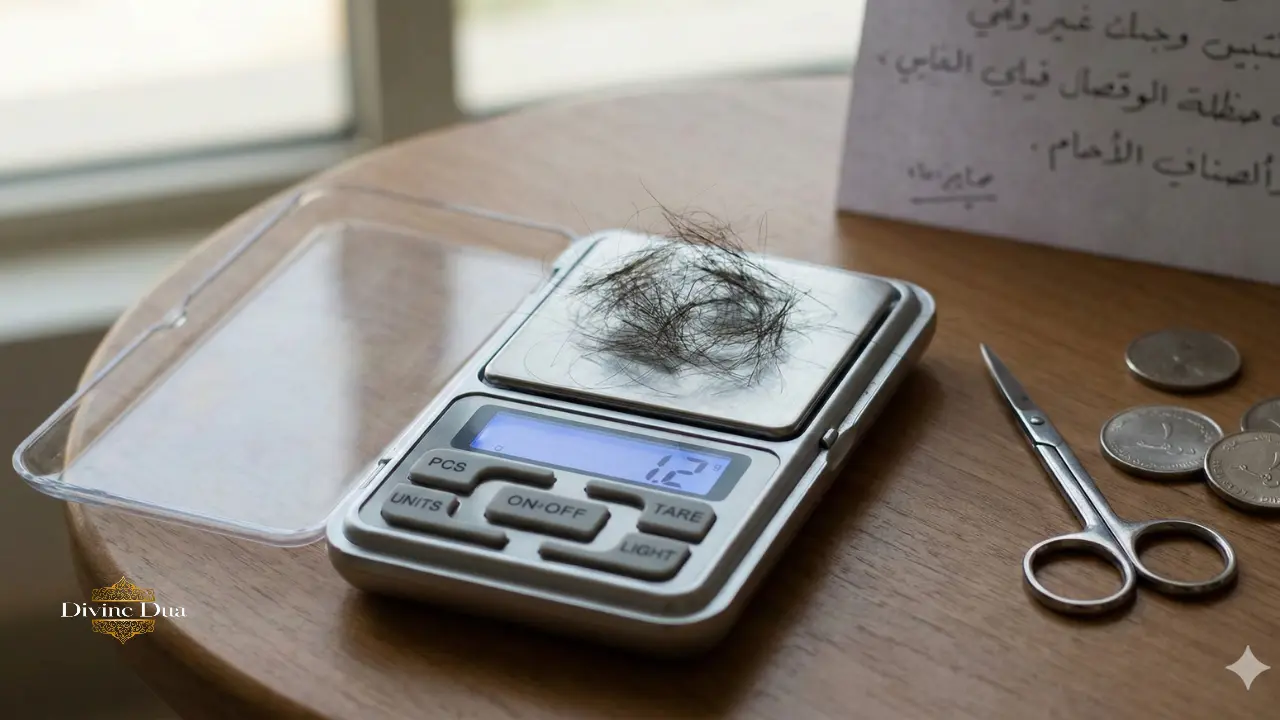
- Giving Charity (Sadaqah): Weigh the shaved hair and give the equivalent value in silver as Sadaqah (charity) to the needy.
- Naming the Child: Officially name the child with a beautiful Islamic name on this day.
- Cooking or Distributing: Unlike the Qurbani, it is preferred to cook the Aqiqah meat and invite guests, though raw distribution is also valid.
Number of Animals (Boy vs Girl)

When determining how many animals for aqeeqah are required, the ruling differs slightly based on the gender of the newborn, following the specific guidance of the Prophet Muhammad (ﷺ):
Aqeeqah for baby boy
The Sunnah is to sacrifice two sheep or goats. Ideally, they should be similar in age and size.
Aqeeqah for baby girl
The Sunnah is to sacrifice one sheep or goat.
Note on Flexibility: If parents cannot afford two animals for a boy, the majority of scholars agree that slaughtering just one is permissible and fully fulfills the Sunnah.
Animal Requirements: Health & Age
The animal chosen for Aqiqah must meet the same strict standards as the animal for Udhiyah (Qurbani). It must be free from apparent defects such as blindness, clear sickness, or extreme thinness.
| Animal Type | Required Aqeeqah Age |
|---|---|
| Sheep | At least 6 months old |
| Goat | At least 1 full year old |
Meat Distribution Rules

Once the sacrifice is complete, understanding the aqeeqah meat distribution is key to fulfilling the social aspect of this worship. Unlike Zakat, the rules here are quite flexible.
How to Distribute Aqeeqah Meat
While there is no fixed percentage in the Quran, scholars recommend following the aqeeqah portion rules similar to Qurbani. The preferred method is to divide the meat into three parts:
- One-third for the family: Parents and their household are fully permitted to enjoy the meat.
- One-third for relatives and friends: Used to host a meal or given as gifts to strengthen bonds.
- One-third for the poor: Distributed as charity (Sadaqah) to the needy.
Common Questions:
Cooked vs. Uncooked?
You may distribute it raw, but it is better to cook the meat and invite people to eat. This is considered more gracious and helpful to the poor.
Can you give meat to non-Muslims?
Yes. Sharing the meat with non-Muslim neighbors or colleagues is a gesture of kindness and a beautiful form of Dawah.
Comparative Fiqh (Four Madhahib Table)
While the essence of the sacrifice remains the same, there are insightful fiqh differences in aqeeqah rules among the four major schools of Islamic jurisprudence. Understanding these nuances helps parents appreciate the flexibility and mercy within Sharia.
Below is a comprehensive summary of the views regarding Aqeeqah Hanafi, Aqeeqah Shafi, Aqeeqah Maliki, and Aqeeqah Hanbali schools:
| Madhhab (School) | Ruling | Number of Animals | Timing & Flexibility | Key Notes |
|---|---|---|---|---|
| Aqeeqah Hanafi | Recommended (Mustahabb) or Permissible (Mubah). Not Sunnah Mu’akkadah. | 1 for Boy 1 for Girl |
Very flexible. Can be done at any time. | Some scholars allow giving the price in charity if slaughter is difficult. |
| Aqeeqah Shafi | Sunnah Mu’akkadah (Confirmed Sunnah). | 2 for Boy 1 for Girl |
Valid until puberty. | If missed, an adult can perform Aqiqah for themselves. |
| Aqeeqah Maliki | Sunnah Mu’akkadah. | 1 for Boy 1 for Girl (Preferred) |
Strict preference for the 7th day. | Prefer not breaking the bones; disjointing them symbolizes child’s health. |
| Aqeeqah Hanbali | Sunnah Mu’akkadah. | 2 for Boy 1 for Girl |
Sequence: 7th day, then 14th, then 21st. | Strongly emphasize the specific days and prefer not breaking bones. |
*Note: All Islamic schools agree that if a person is financially unable to afford the sacrifice, there is no sin upon them, as Allah does not burden a soul beyond its capacity.
Contemporary Issues & FAQs
Modern life brings modern scenarios. Below are the most pressing aqeeqah questions answered according to general scholarly consensus to help you fulfill this Sunnah with clarity.
1. Can I give money instead of Aqeeqah?
This is perhaps the most common question. The majority of scholars state that giving money instead of Aqeeqah does not fulfill the Sunnah. The essence of Aqiqah is the “spilling of blood” (sacrifice) for the sake of Allah. Donating the cash value is considered generic Sadaqah (صدقة), but it is not an Aqiqah.
2. Is Aqiqah for adults permissible?
Yes. If your parents did not perform it for you as a child, Aqeeqah for adults is considered valid, particularly in the Shafi’i madhhab. It is reported that the Prophet Muhammad (ﷺ) performed Aqiqah for himself after his prophethood.
3. Is Aqiqah required for a deceased child?
If the child was born alive and then passed away, it is recommended to perform Aqiqah. Scholars link this to the spiritual benefit of the child interceding for their parents on the Day of Judgment.
4. How is Aqiqah handled for twins?
Each child is treated individually. For twin boys, the Sunnah is 4 sheep/goats; for twin girls, it is 2 animals total.
Aqiqah Cost & Global Price Comparison
Budgeting for this occasion is a practical necessity. The aqeeqah cost varies significantly depending on whether you perform the slaughter locally or delegate it through an international charity service.
Factors Affecting Aqeeqah Price
Before looking at the numbers, understand what drives the aqeeqah price:
- Location: Livestock in Western countries (UK, USA, Europe) is significantly more expensive.
- Animal Type: Goats can be more expensive than sheep in certain regions.
- Service Level: Full packages (slaughtering, skinning, and delivery) add to the cost.
Average Price Comparison (2025-2026 Estimates)
If you are looking to buy aqeeqah online or perform it locally, here is a general price guide:
| Country | Local Slaughter Cost | Online Service (Donation) |
|---|---|---|
| United Kingdom (UK) | £180 – £350 | £45 – £90 |
| United States (USA) | $250 – $450 | $60 – $120 |
| Saudi Arabia | 450 SAR – 900 SAR | N/A |
| Malaysia | RM 800 – RM 1,300 | RM 350 – RM 600 |
Why Use an Aqeeqah Service?
Many parents now choose a professional aqeeqah service for convenience and to help the needy abroad. This is a valid option in Islamic Fiqh, known as Tawkeel (توكيل) or delegation.
Checklist for Choosing a Trusted Provider:
- Sharia Compliance: Guarantee of the animal’s age and health.
- Transparency: Providing photo or video proof of the sacrifice.
- Mention of Name: Ensuring the child’s name is mentioned during slaughter.
- Timing: Ability to perform the sacrifice on the 7th day if requested.
To ensure you don’t miss a single Sunnah act amidst the excitement of your new arrival, we have created this aqeeqah preparation list. You can bookmark this page or print it to serve as your personal aqeeqah guide to stay organized during this blessed occasion.
✅ Your Aqeeqah Action Plan
✅ Your Aqeeqah Action Plan
Phase 1: Preparation (Before the 7th Day)
- 📅 Check the Calendar: Calculate the exact 7th day. (Remember: if born after Maghrib, the count starts from the following day).
- 💰 Set a Budget: Determine if you will perform the sacrifice locally or use an international aqeeqah service.
- 🐑 Select the Animal: Ensure it meets Sharia requirements (2 sheep/goats for a boy, 1 for a girl).
- 📞 Choose a Butcher/Service: If delegating, book in advance to ensure the slaughter happens on the 7th day.
- 📸 Documentation: Request video or photo proof of the slaughter with your child’s name mentioned.
Phase 2: The Blessed 7th Day
- ❤️ Make the Intention (Niyyah): Confirm in your heart that this act is specifically for your child’s Aqiqah.
- 🔪 Perform the Slaughter: Ideally done in the morning as part of the day’s blessings.
- 👶 Name the Child: Officially announce the chosen Islamic name.
- ✂️ Shave the Head: Shave the baby’s hair gently (Sunnah starts from the right side).
- ⚖️ Weigh the Hair: Use a sensitive scale to weigh the hair in grams for charity calculation.
Phase 3: Post-Aqiqah (Distribution & Charity)
- 🪙 Calculate Silver Value: Check the current silver price per gram and multiply it by the hair weight.
- 🤝 Give Sadaqah: Donate the calculated amount to the poor immediately.
- 📦 Distribute the Meat: Divide into three parts: 1/3 for family, 1/3 for gifts/friends, and 1/3 for the needy.
- 🥘 Host a Meal (Optional): Cook the meat and invite loved ones to share the joy (Walimah).

Conclusion: A Blessed Beginning
We hope this complete aqeeqah guide has provided you with the clarity and confidence needed to perform this beautiful Sunnah. Having the rules, wisdom, and steps of Aqeeqah explained ensures that your focus remains on what truly matters: gratitude to Allah and the celebration of new life.
Remember, Aqiqah is more than just a tradition; it is a powerful act of worship that brings Barakah (بركة) and spiritual protection to your child. Whether you perform it yourself or delegate it to a trusted service, ensure your intention is pure and your method follows the Islamic aqeeqah guide of the Prophet (ﷺ).
May Allah bless your newborn, make them among the righteous, and fill your home with happiness and light.
📚 What’s Next?
Don’t let the preparation stress you out. Make sure you have everything ready by revisiting our checklist above.
Found this guide helpful?