

Many people maintain their prayers consistently, performing the obligatory acts and standing before God, yet sometimes they feel that their hearts are not truly present. They may stand before God, but the serenity they seek does not come, or the impact of the prayer on their inner self feels weak.
This feeling does not indicate a lack of faith; rather, it reflects an inner state that needs understanding and attention. Prayer performed physically without heartful presence may leave one feeling empty, even though the actions are correct.
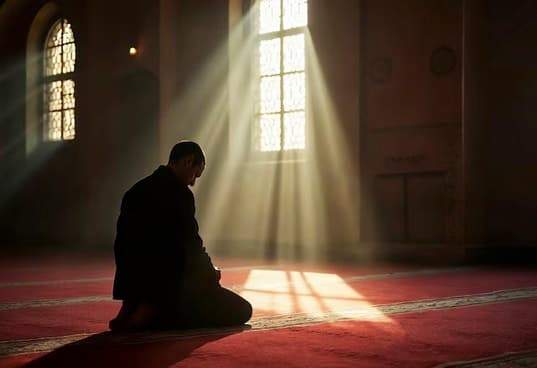
Spiritual Distance Does Not Mean Weak Faith
The Quran makes clear that true distance is associated with disbelief and turning away from God’s path, which is different from the experience of a believer whose heart sometimes feels distant:
“Indeed, those who disbelieve and prevent [others] from the way of Allah have gone far astray.”
(An-Nisa 167-168)
A believer who continues to pray and remain obedient is not distant in essence, even if the heart feels temporarily disconnected. Spiritual distance in this context is a heart condition, not a loss of faith.
Causes of Spiritual Distance
1. Unaddressed Sins
Sins, whether major or minor, leave a mark on the heart if not repented. They diminish the impact of worship even when the outward actions continue.
The Quran mentions:
“And whoever invokes besides Allah that which neither harms him nor benefits him – it is as though he were arrogant on earth without right.”
(Al-Hajj 13)
Even acts that appear as worship can weaken the heart if one’s devotion is diverted from God. Each sin creates a barrier between the heart and the full effect of prayer.
2. Approaching Forbidden Acts
Some prohibitions are not just about avoiding the act itself, but also avoiding its proximity, as it prepares the heart for sin. Regarding adultery, God commands:
“Do not approach unlawful sexual intercourse. Indeed, it is ever an immorality and is evil as a way.”
(Al-Isra 32)
This shows that even the surroundings and temptations that lead to sin can dull the heart’s responsiveness during prayer.

3. Diminished God-Consciousness
Each sin reduces the awareness of God’s presence, causing the heart to be absent during prayer. The Quran says:
“The Day when neither wealth nor children will benefit [anyone], except him who comes to Allah with a sound heart.”
(Ash-Shu’ara 88-89)
A sound heart, free from sin, is receptive to God’s presence, while a heart weighed down by unrepented wrongdoing may go through prayer physically, without inner engagement.
The Role of Character in Spiritual Proximity
Moral character directly impacts the heart’s ability to connect with God. Harshness, injustice, anger, and arrogance burden the heart and hinder the depth of prayer.
The Prophet Muhammad (peace be upon him) said:
“The most complete of the believers in faith are those with the best character.”
Good character purifies the heart and enables it to experience serenity and attentiveness during prayer, while poor character diminishes spiritual impact.
Why Physical Prayer Alone Is Not Enough
Prayer is obligatory, but its essence is the engagement of the heart. The Prophet emphasized that prayer is not only physical movement but inner presence. Repetition without mindfulness may reduce spiritual effect, making one feel distant even while performing all physical acts correctly.
The Quran affirms this principle:
“Successful indeed are the believers; those who are humble in their prayers.”
(Al-Mu’minun 1-2)
Humility here refers to the heart’s surrender, not just bowed heads or body posture.

Approaching Forbidden Acts
Routine and Habituation
When prayer becomes a routine habit, performed automatically, the heart may disengage. Habitual prayer without conscious attention reduces internal focus, making spiritual presence sporadic or weak.
The remedy lies in conscious mindfulness, reflecting on the words, and understanding the meanings of recitations.
Observing the Difference in Your Heart During Prayer
Reflective Questions for the Reader
-
“During your prayers, do you notice moments when your mind drifts to other thoughts? What are those distractions?”
-
“Do you feel a sense of calm and presence, or do you feel empty and mechanical while praying?”
-
“Which personal habits, sins, or emotions might be affecting your focus and connection with God?”
-
“Have you tried pausing before prayer to set your intention and reflect on the meaning of the verses?”
-
“After completing your prayer, how would you describe your spiritual state: connected, distracted, or somewhere in between?”
Observing the Difference in Your Heart During Prayer
-
Pay Attention to Your Focus
-
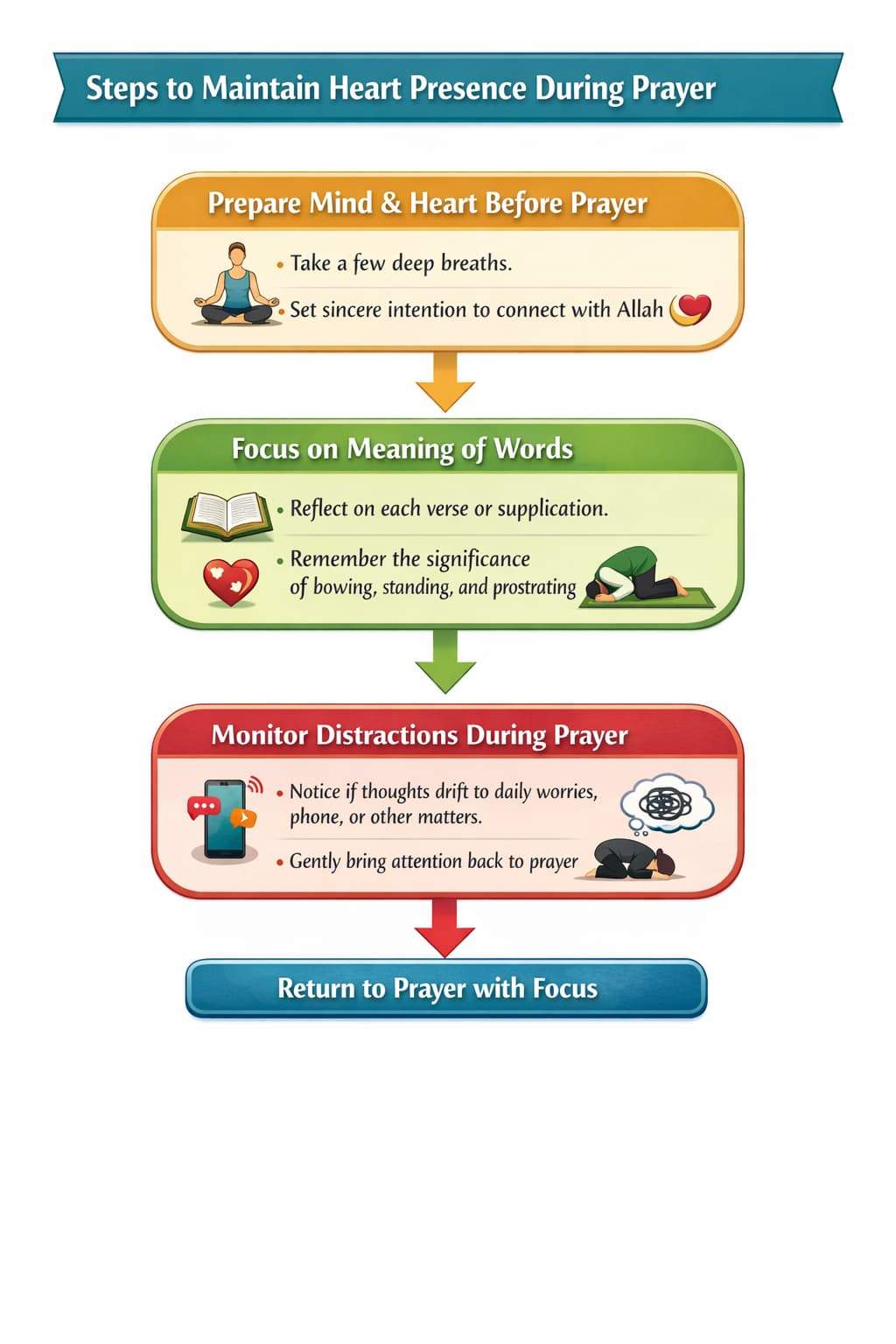
Notice your mind during each part of the prayer: Are you distracted, or fully present?
-
Awareness helps distinguish between merely performing physical actions and truly engaging the heart.
-
Practical tip: During each movement (bowing, prostration, standing), silently remind yourself of its meaning, e.g., “I am submitting to Allah” or “I seek His mercy.”
-
Observe Your Inner Feelings
-
Your heart signals presence or absence: feelings of calm, humility, or peace indicate engagement.
-
Feelings of emptiness, boredom, or restlessness suggest that the prayer is mechanical and not fully heartfelt.
-
Practice Mindful Repetition
-
Take a minute before prayer to breathe deeply and reflect on your intention: connecting with God.
-
Focus on the meaning of the words and verses during prayer, preventing distractions.
-
After completing the prayer, reflect: Did you feel spiritually close, or was it routine and empty?
By consistently observing these signs, a believer can gradually distinguish when the heart is truly present and take steps to deepen spiritual engagement.
The Pitfall of Expecting Immediate Feelings
Some expect a sense of tranquility or connection to come instantly. When it does not, they feel distant. True spiritual proximity is gradual, developed through heart purification, sincerity, and repeated devotion.
Immediate emotional feedback should not determine the value of prayer; heart presence strengthens over time.
Restoring the Heart’s Presence
-
Sincere Repentance – Returning from sins and seeking forgiveness clears the heart.
-
Improving Character – Ethical behavior softens the heart and enhances spiritual receptivity.
-
Mindful Prayer – Concentrating on the meaning of words and maintaining sincere intention ensures full engagement.
Prayer as a Means to Reconnect
Even when the heart feels distant, supplication is a powerful way to restore closeness:
Suggested Du’a:
“O Allah, draw me near to You with a heart that attaches only to You. Purify my heart from all that distances me from Your remembrance, and make my prayer a light for me on the Day of Judgment.”
This prayer seeks to remove internal barriers and fills the heart with the love of God and mindfulness in worship.
Conclusion: The Path to Spiritual Closeness
Feeling distant during prayer does not signify loss of faith. It signals the need for reflection, heart purification, and self-assessment. Sin, poor character, habit, and unrealistic expectations can dull the heart’s responsiveness.
By repenting, improving character, performing mindful prayer, and invoking God sincerely, the heart gradually regains presence. Prayer then becomes more than physical movements; it becomes a source of inner serenity, spiritual connection, and enduring closeness to God.